How Independent Record Labels Transformed Contemporary Music Culture
Walk into any gig venue in London, Manchester or Glasgow on a Friday night, and there’s a fair chance the artist on stage owes their career to an independent record label. What was once considered the scrappy underdog of the music business has become one of its most powerful forces — reshaping not just how music is made and distributed, but how entire genres, scenes and subcultures come to life.
Independent labels have always existed on the fringes, but over the past four decades they’ve moved from the margins to the mainstream. Today, they account for a substantial share of global music revenue, launch some of the world’s biggest artists, and continue to champion the kind of creative risk-taking that major corporations often shy away from. This article explores how independent record labels transformed contemporary music culture — from punk’s DIY revolution to the streaming era — and why they matter more than ever.
What Exactly Is an Independent Record Label?
Before diving into the cultural impact, it’s worth clarifying what “independent” actually means in this context. An independent record label — often shortened to “indie label” — is a record company that operates without the funding or ownership of the major label groups. Historically, that meant the “big three”: Universal Music Group, Sony Music Entertainment and Warner Music Group.
Independence isn’t really about size. Some indie labels, like XL Recordings or Beggars Group, are sizeable operations with international reach. Others are run from a bedroom by one passionate person with a laptop and a love for a particular scene. What unites them is autonomy: the freedom to sign artists they believe in, release music on their own terms, and build culture rather than simply chase quarterly profits.
It’s also worth noting the distinction between a label and a distributor. A label typically handles A&R (finding and developing artists), funding recordings, marketing and artist development. A distributor simply gets the music into shops or onto streaming platforms. Many independent labels work with independent distributors — or increasingly, handle digital distribution themselves — while retaining full creative and commercial control.
The Punk Explosion and the Birth of DIY Culture
You can’t tell the story of independent labels without starting in the mid-1970s. Punk rock didn’t just change how music sounded — it changed who was allowed to make it. When major labels dismissed punk as unmarketable noise, a generation of musicians, fanzine writers and hustlers simply built their own infrastructure.
In the UK, labels like Stiff Records, Rough Trade and Factory Records became cultural institutions. Factory, co-founded by Tony Wilson in Manchester, famously operated without traditional contracts, splitting profits 50/50 with artists like Joy Division and New Order. Rough Trade began as a record shop in Notting Hill and grew into a label and distribution network that supported hundreds of independent releases.
Across the Atlantic, labels such as SST (founded by Black Flag’s Greg Ginn), Dischord (Ian MacKaye’s Washington DC operation) and Sub Pop in Seattle built entire ecosystems around hardcore punk, post-punk and eventually grunge. Dischord’s famously ethical approach — affordable records, all-ages shows, no exploitative contracts — became a blueprint for independent music ethics that still resonates today.
The Ethos That Changed Everything
What punk-era indies established was a set of principles that would define independent music culture for decades:
- Creative control belongs to the artist. Indie labels typically offer far more artistic freedom than majors, where commercial considerations often dictate sound and image.
- Community over commerce. Independent labels tend to emerge from scenes — local, genre-based or ideological — and reinvest in those communities.
- Anyone can do this. The DIY ethos democratised music-making. You didn’t need permission, connections or a trust fund. You needed passion and persistence.
From the Underground to the Mainstream: The 1990s and 2000s
If punk proved independent labels could exist, the 1990s proved they could dominate. Sub Pop’s role in launching Nirvana, Soundgarden and Mudhoney turned Seattle into the centre of the musical universe. When Nevermind knocked Michael Jackson off the top of the US charts in 1992, it was a watershed moment — music nurtured by the independent underground had conquered the mainstream.
In the UK, Creation Records gave the world Oasis, Primal Scream and My Bloody Valentine, while labels like Warp Records in Sheffield pioneered electronic music that would influence everything from techno to modern pop. Domino Recording Company, founded in 1993, would go on to release era-defining records by Arctic Monkeys, Franz Ferdinand and Animal Collective.

The 2000s brought another seismic shift: the internet. While piracy devastated parts of the industry, it also levelled the playing field. Independent labels could suddenly reach global audiences without the massive marketing budgets of the majors. Arctic Monkeys famously built their fanbase through file-sharing and MySpace before their debut album became the fastest-selling debut in UK chart history at the time — released on Domino, an independent.
The Streaming Era: Independence Goes Global
The rise of streaming has arguably been the most transformative force for independent music since punk. Digital distribution removed the gatekeepers almost entirely. Today, an artist can upload music to Spotify, Apple Music and every other platform through services like TuneCore, DistroKid or AWAL for a modest fee — something unimaginable twenty years ago.
The numbers tell a compelling story. According to MIDiA Research, independent labels and self-releasing artists collectively account for a significant and growing share of the global recorded music market, with the independent sector generating billions of dollars annually. Merlin, the global digital licensing agency representing independent labels, now negotiates directly with streaming platforms on behalf of thousands of members — giving indies collective bargaining power they never had in the physical era.
Success Stories That Redefined “Independent”
Some of the most successful independent labels of recent years have achieved results that rival the majors:
- XL Recordings — home to Adele, Radiohead (for In Rainbows), The xx and Tyler, the Creator. Adele’s albums on XL became some of the best-selling records of the 21st century.
- 4AD — the legendary Beggars Group imprint behind The National, Bon Iver, Pixies and Cocteau Twins, proving that artistic credibility and commercial success aren’t mutually exclusive.
- Young (formerly Young Turks) — launched The xx, FKA twigs and Sampha, shaping the sound of British alternative music.
- 88rising — the US-based label that brought Asian hip-hop and R&B to a global audience, demonstrating how indies can build entirely new markets.
- PC Music — A. G. Cook’s London collective essentially invented hyperpop, influencing mainstream artists from Charli XCX to Beyoncé’s collaborators.
How Independent Labels Changed Music Culture Itself
The influence of independent labels extends far beyond sales figures. They’ve fundamentally altered the culture of music in several profound ways.
Genre Innovation and Preservation
Major labels tend to invest in proven formulas. Independent labels, by contrast, have historically been the incubators of genuinely new sounds. Grime, dubstep, shoegaze, post-rock, lo-fi hip-hop, hyperpop — virtually every significant genre movement of the past forty years was nurtured by independents before the mainstream caught on. Labels like Hyperdub, Ninja Tune and Hessle Audio didn’t just release electronic music; they defined what electronic music could be.
Artist-Friendly Business Models
Independent labels have pioneered fairer deal structures. Where traditional major label deals might see artists receiving a small percentage of revenue after recoupment, many indies offer profit-split arrangements, shorter terms and greater transparency. This has pressured the wider industry to reform. The conversation around fair artist compensation — now a mainstream concern — began in independent circles.
Identity, Community and Representation
Independent labels have consistently provided platforms for voices the mainstream ignored. From queercore labels in the 1990s to today’s labels championing underrepresented artists across hip-hop, afrobeats and experimental music, indies have made music culture more diverse and inclusive. These efforts reflect how underground music scenes challenge conventional industry gatekeeping. Organisations and labels recognised by institutions like Berklee for making meaningful change in the industry are disproportionately independent — because independence allows values to lead decision-making.
What Do Record Labels Actually Do for Artists?
This is one of the most common questions aspiring musicians ask — and the answer has evolved considerably. At their best, independent labels provide:
- Funding for recording, mixing, mastering, videos and touring
- A&R and artist development — helping artists refine their sound and vision over time
- Marketing and press — securing coverage, playlist placements and radio play
- Distribution — physical and digital, including vinyl manufacturing, which remains a complex logistical challenge
- Sync licensing — placing music in films, adverts and games, an increasingly vital revenue stream
- Community and credibility — being on a respected label signals quality to fans, journalists and bookers
That said, the modern landscape offers alternatives. Some artists thrive entirely independently, using distributors and building audiences through social media. Others sign to indie labels for specific campaigns. The key shift is that artists now have genuine choice — a direct legacy of the independent movement’s decades-long challenge to major label hegemony.
How Independent Labels Find and Sign Talent Today
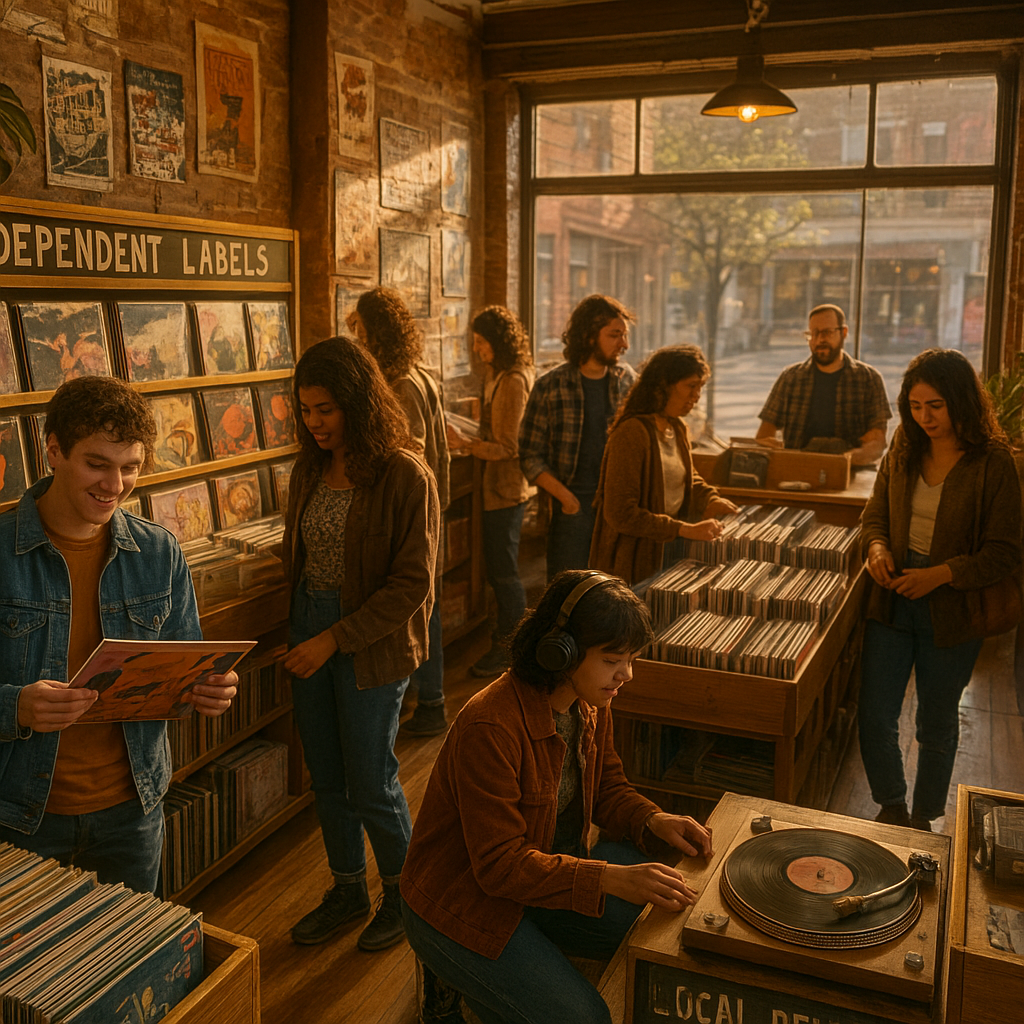
For artists wondering how independent labels discover new talent, the process has changed dramatically. A&R scouts still attend gigs, but they also trawl Spotify playlists, TikTok, Bandcamp and SoundCloud for emerging sounds. Many indie labels actively encourage demos and maintain open submission policies, particularly smaller operations keen to discover artists early.
The advice for artists remains consistent: build a genuine following, develop a distinctive sound, and engage with the scenes and communities where your music belongs. Independent labels are, at heart, fans first — they sign music they love, and they can spot authenticity from a mile off.
The Challenges Facing Independent Labels
For all their cultural triumphs, independent labels face real pressures. Streaming economics favour scale, and per-stream payouts remain modest. Vinyl manufacturing delays — exacerbated by surging demand — hit smaller labels hardest, as pressing plants prioritise major label orders. These production bottlenecks highlight how vinyl records shaped modern music culture. Marketing costs continue to rise as competition for attention intensifies.
There’s also the question of what “independent” means when major labels acquire successful indies or launch their own “indie-style” imprints. The lines have blurred, and debates about authenticity and ownership continue within the community.
Yet the sector has proven remarkably resilient. Cooperative structures like Merlin, trade bodies such as AIM (the Association of Independent Music) in the UK and A2IM in the US, and a renewed cultural appreciation for independent music — evidenced by record store culture, Bandcamp Fridays and the vinyl revival — suggest the indie spirit is in rude health.
Conclusion: The Indie Spirit Endures
Independent record labels transformed contemporary music culture not through a single revolution, but through decades of persistent, passionate work. They proved that great music doesn’t require corporate approval. They built fairer business models, launched genre-defining artists, preserved underground scenes and democratised the means of musical production and distribution.
From the DIY punk ethos of the 1970s to today’s globally connected streaming landscape, the core principle remains unchanged: music matters most when it’s made with conviction rather than calculation. Whether it’s a bedroom label releasing limited-run cassettes or an established indie placing albums at the top of the charts, independent labels continue to remind the industry — and the world — that culture is built from the ground up.
As the music business continues to evolve, one thing seems certain: wherever there’s a new sound, a marginalised voice or a scene the mainstream hasn’t noticed yet, an independent label will be there first — just as it always has been.