Traditional Instruments from Around the World: A Global Exploration
Music is a universal language, and traditional instruments from around the world play a vital role in expressing the cultural identities of their communities. These instruments, ranging from the sitar of India to the djembe of West Africa, embody unique histories, techniques, and sounds that reflect the traditions of their respective cultures. Exploring these traditional musical instruments reveals the diverse types of instruments and their contributions to traditional music across different societies.
Each culture has developed its own distinctive instruments, which are often tied to social rituals, festivities, or storytelling. For instance, the harp in Celtic music delivers a sense of nostalgia, while the didgeridoo from Australia evokes deep connections to land and heritage. By understanding the significance and construction of these instruments, one gains insight into the cultural values and artistry that shape the music of the world.
As technology evolves, the preservation of these traditional instruments is crucial for maintaining cultural legacies. The rich variety of sounds and styles can inspire musicians and enthusiasts alike to connect with heritage through music. Delving into the fascinating world of traditional instruments not only enhances appreciation for global music but also brings awareness to the ongoing efforts to keep these art forms alive.
Traditional String Instruments
Traditional string instruments vary significantly across cultures, offering unique sounds and playing techniques. These instruments have shaped musical traditions worldwide through their distinctive features and the materials used in their construction.
Europe and the Lute Family
The lute family represents the rich musical heritage of Europe, with instruments such as the oud and the bouzouki. The lute itself, often used in ensembles, produces a melodious tone and is played by plucking the strings.
Variations like the balalaika from Russia feature a triangular body and three strings, creating a unique sound in folk music. Instruments such as the violin are fundamental in classical performance, characterised by their expressive range and ability to accompany singing or solo compositions. The banjo adds a lively element to genres such as bluegrass and folk, known for its distinctive strumming and plucking techniques.
Asia’s Zithers and Bowed Strings
In Asia, string instruments frequently highlight cultural diversity. The sitar, integral to Indian classical music, is typically played with a plectrum and features a complex resonating body for rich overtones.
The koto, a Japanese zither, has 13 strings and is played by plucking with fingerpicks, creating a serene sound reflective of its cultural roots. The guzheng, another zither from China, excels in expressive melodies and is essential in traditional orchestras. Bowed instruments like the erhu, with its two strings and distinct timbre, are also crucial in various Asian music genres, providing both melodic and harmonic support.
Africa’s Unique String Sounds
Africa presents a diverse array of string instruments, often built from locally sourced materials. Instruments like the mbira, or thumb piano, consist of metal tines placed over a resonating body, producing mellow, soothing sounds.
The kora, a 21-string lute-harp, blends both plucking and bowing techniques, used widely in West African music. Instruments such as the ngoni, a traditional lute, create rhythmic patterns accompanied by singing. African string instruments often reflect communal values, serving as a means of storytelling and cultural expression.
America’s Diverse Stringed Heritage
In the Americas, string instruments encompass a vast range of types and styles. The charango, a small Andean instrument, has ten strings and offers a bright sound, often accompanying folk songs.
The steelpan, though not a traditional string instrument in the strictest sense, has a compelling resonance akin to stringed sounds and is pivotal in Caribbean music. The influence of African instruments led to the incorporation of styles like the banjo, which became prominent in American folk and bluegrass genres. Each instrument’s role varies from solo performance to ensemble play, contributing richly to the musical landscape of the Americas.
Traditional Wind Instruments
Wind instruments are diverse, reflecting a wide range of cultural traditions and playing styles across the globe. This section will explore notable examples of flutes, pipes, and reed instruments from various regions.
Flutes and Pipes Across Continents
Flutes and pipes are among the oldest instruments known to humanity. Various cultures have developed unique versions, often made from local materials.
- Didgeridoo: Originating from Australia, this long, cylindrical wooden instrument is played by blowing into one end while vibrating the lips. It produces a deep, resonant sound and is integral to Aboriginal music.
- Shamisen: Although primarily a string instrument, some variations incorporate wind elements. This Japanese instrument showcases the melding of different musical traditions.
- Rondador: Common in the Andean region, this wooden flute is played by blowing across a series of holes, creating melodic tunes that accompany folk music and dances.
Reed Instruments Around the World
Reed instruments utilise vibrating reeds to generate sound, contributing to rich musical traditions globally.
- Bagpipes: Prominent in Europe, bagpipes consist of a bag that stores air, which is released through reed pipes. The unique sound is central to cultural celebrations in Scotland and Ireland.
- Northern Indian Instruments: Instruments like the shehnai are essential in traditional Indian music. The shehnai has a double reed and is often played at weddings and festive occasions, delivering a distinct, joyous sound.
These wind instruments each carry their cultural significance while showcasing the variety in construction and musicality.
Percussion Instruments and Rhythmic Heritage
Percussion instruments play a vital role in cultural expression across continents. They provide rhythm and vitality to traditional music, celebrating community and heritage.
African Rhythmic Infusion
African music features a rich tapestry of percussion instruments that emphasise rhythm. The Mbira, often referred to as a thumb piano, is prominent in Zimbabwe. It is played by plucking metal tines mounted on a wooden board, producing resonant tones.
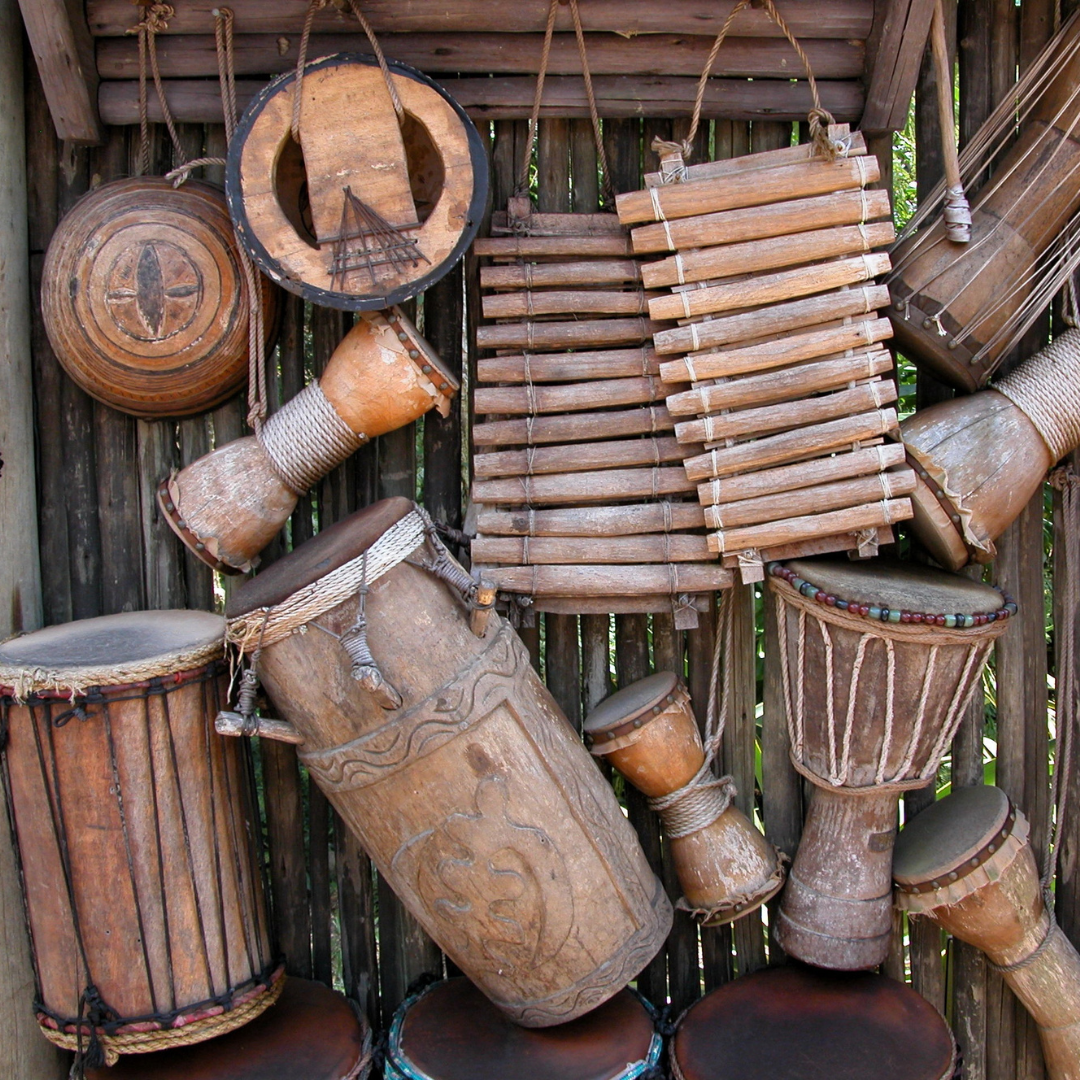
Drumming is central to many African cultures. Instruments such as the djembe create deep, rich sounds, used in celebrations and rituals. Players use various techniques, including hit, rub, and stamp to generate diverse rhythms. These performances foster a sense of community and connection to cultural roots.
Asian Percussive Traditions
In Asia, percussion instruments enrich musical traditions, each with unique cultural significance. The taiko, a large Japanese drum, is vital in festivals, noted for its powerful beats and dynamic performances. Taiko players often engage in choreographed movements, enhancing the visual experience.
Similarly, the baja, a type of frame drum, is integral to many South Asian musical genres. Its versatile sounds accompany folk performances and classical music. The rhythmic patterns drawn from both instruments help convey emotions and narrate stories inherent in Asian traditions.
America’s Melodies and Beats
Percussion instruments in the Americas are foundational to various music styles, from jazz to folk. The berimbau, originating from Brazil, demonstrates a blend of African influence and regional traditions. It consists of a single-string instrument played with a stick and a stone, guiding rhythms in capoeira, a martial art form.
In North America, the use of the frame drum connects Indigenous cultures to their ancestry. This instrument features prominently in ceremonies and social gatherings, embodying spiritual significance. Through these percussion instruments, the Americas continually connect their musical legacies to their rich historical narratives.
Cultural Significance and Acoustic Evolution
Traditional instruments carry deep cultural significance, reflecting the history and identity of communities worldwide. Each instrument embodies unique acoustic properties, shaped by local materials and playing techniques.
For example, the sitar from India showcases intricate construction and resonance, symbolising spiritual and artistic heritage. Similarly, the djembe from West Africa serves as a social and communal tool, often accompanying celebrations and rituals.
Innovations in instrument design have emerged throughout history, blending traditional craftsmanship with modern advancements. This evolution has allowed for enhanced sound quality and diverse playing experiences.
In recent decades, traditional instruments have experienced modern adaptations. Artists integrate these instruments into contemporary music genres, creating hybrid sounds that resonate with broader audiences. This fusion helps preserve cultural identity while appealing to youthful listeners.
Traditional musical instruments, such as the shakuhachi from Japan and the ukulele from Hawaii, illustrate the diversity in acoustic qualities. Each instrument contributes uniquely to the fabric of global music culture, allowing for expression and creativity.
The ongoing evolution of these instruments reflects their enduring relevance and ability to connect generations, ensuring that cultural narratives continue to be celebrated through sound.


You May Also Like
How to Choose the Right Instrument for You: A Comprehensive Guide
Beginner’s Guide to Playing Ukulele: Master the Basics with Ease